
Reduce Legionella risk in air conditioning systems
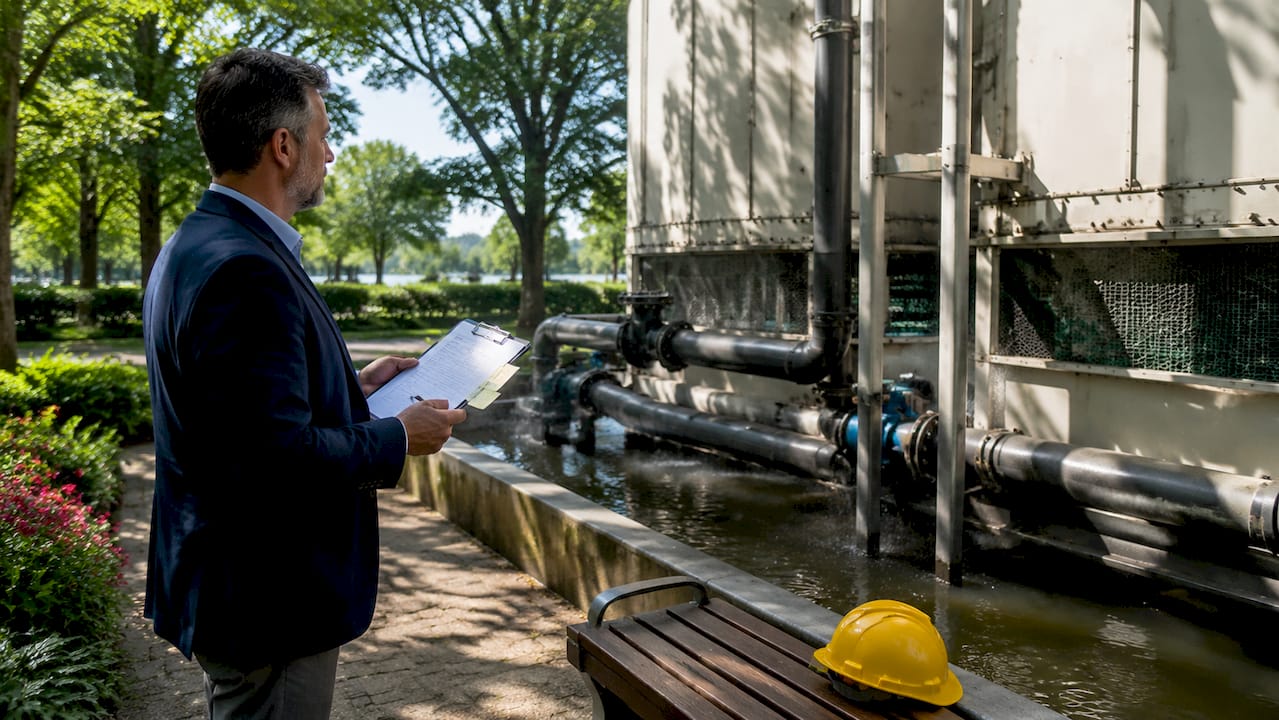
Controlling Legionella risk in air conditioning systems is fundamentally a water management challenge, not an air quality one. Legionella pneumophila, the bacterium responsible for Legionnaires’ disease, does not spread through conditioned air itself. It amplifies in warm, stagnant water inside HVAC components and disperses via aerosolised water droplets. Facility managers and compliance officers in commercial and healthcare settings must treat cooling towers, evaporative condensers, and associated pipework as the primary control environment. Standards including ACoP L8 and CDC water management toolkits provide the regulatory framework, but practical risk reduction depends on documented programmes, precise monitoring, and trained personnel.
What are the primary sources of Legionella risk in HVAC systems?
Legionella bacteria thrive in water temperatures between 20°C and 45°C, with optimal growth near 37°C. This temperature band maps directly onto the operating conditions found in cooling towers, evaporative condensers, and poorly insulated pipework. The risk is not theoretical. Cooling towers recirculate warm water across large surface areas, producing fine aerosols that can travel considerable distances from the plant room to occupied areas or public spaces.
The distinction between potable water plumbing and HVAC water systems matters here. Potable systems carry their own Legionella risks, particularly at thermostatic mixing valves and dead-leg pipework, but HVAC aerosolising systems require entirely separate control strategies focused on aerosol suppression and biocide management. Treating them as equivalent is one of the most common governance errors in commercial facilities.
Four conditions accelerate bacterial amplification in HVAC water systems:
Biofilm formation on tower fill, pipework, and basin surfaces, which shields bacteria from disinfectants
Temperature exceedances where cold water circuits warm above 20°C or hot circuits cool below safe thresholds
Stagnant zones created by low-use sections, dead legs, or seasonal shutdown periods
Disinfectant depletion caused by high organic load, scale, or infrequent dosing
Pro Tip: In healthcare premises, the consequences of a Legionella outbreak extend beyond regulatory penalties. Immunocompromised patients face significantly higher mortality risk, which is why healthcare Legionella compliance requires a more rigorous monitoring frequency than standard commercial buildings.
Which water management programme components work best for Legionella prevention?
A documented water management programme (WMP) is the operational backbone of any effective Legionella control strategy. The CDC toolkit and ACoP L8 both require WMPs to identify risk areas, assign responsibilities, and specify cleaning, flushing, and disinfection schedules. The WMP is not a one-off document. It functions as a living framework requiring ongoing monitoring, corrective response, and regular review.
The core components of an effective WMP for HVAC systems are:
Risk assessment and system schematic mapping all water-bearing components, flow paths, and potential amplification points
Assigned responsible person with documented competence and authority to act on monitoring breaches
Scheduled mechanical cleaning of cooling tower fill, basin, and distribution system at defined intervals
Chemical treatment programme specifying biocide types, dosing frequencies, and target residual levels
Drift eliminator inspection and maintenance to limit aerosol generation at source
Monitoring schedule with defined control limits for temperature, disinfectant residuals, and microbiological sampling
Corrective action procedures predefined before any breach occurs, not written reactively after a positive culture result
The table below summarises the monitoring parameters and their typical control limits under ACoP L8 guidance:
Parameter | Control limit | Action if breached |
Cold water temperature | ≤20°C at sentinel outlets | Investigate insulation, flow rates, and heat gain |
Hot water temperature | ≥50°C at sentinel outlets | Check calorifier settings and circulation |
Biocide residual | Per product specification | Re-dose and retest within defined timeframe |
Microbiological count | Per risk assessment threshold | Escalate to disinfection and review WMP |
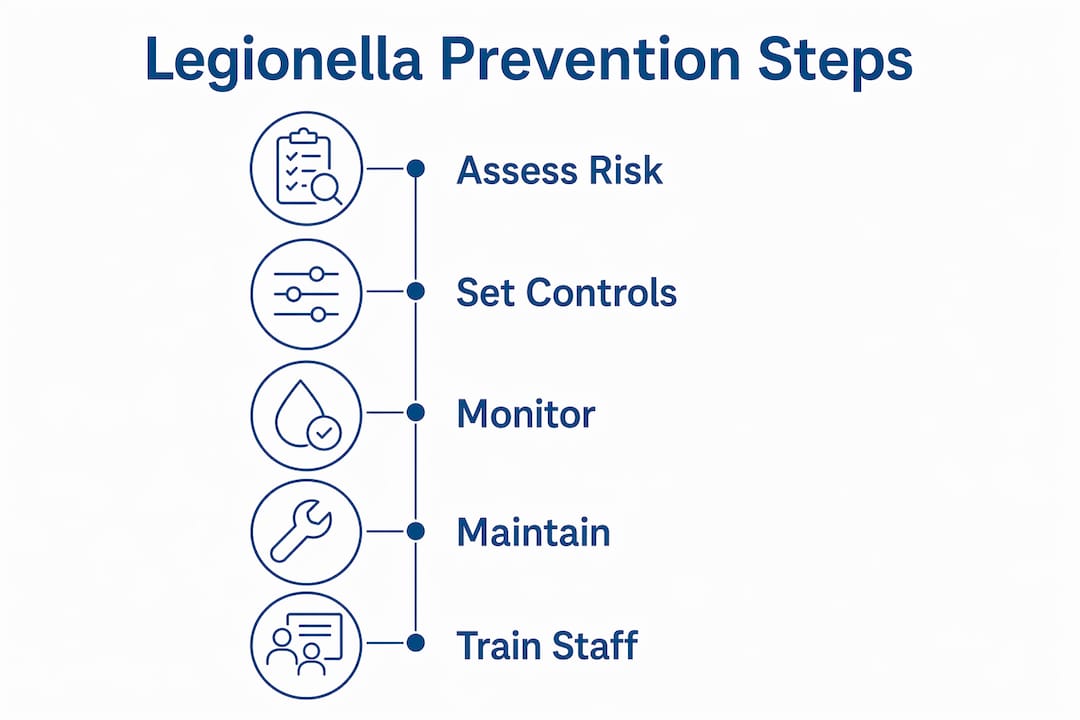
Pro Tip: Written control schemes must predefine corrective actions and escalation steps rather than waiting for a positive test result. Deciding remediation actions after a culture comes back positive is a governance failure, not a response plan.
How should temperature and disinfectant controls minimise Legionella growth?
Temperature control is the most direct lever for inhibiting Legionella amplification, but it requires precision across the entire distribution system, not just at the plant. ACoP L8 temperature thresholds state that cold water must be maintained at or below 20°C and that exceeding this threshold requires immediate investigation and corrective action.
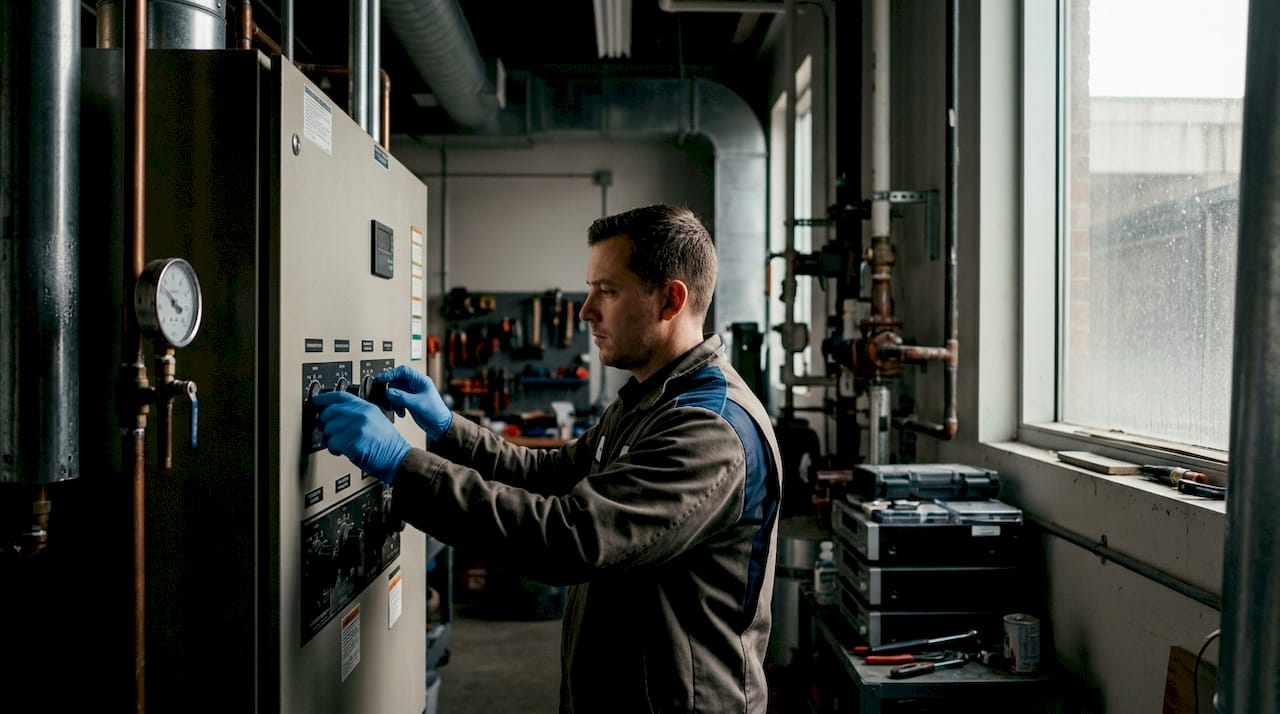
The practical challenges are significant. Cold water circuits in large commercial buildings can warm above 20°C when routed through plant rooms, alongside hot pipework, or in poorly ventilated ceiling voids. Hot water circuits must be stored and distributed at temperatures that prevent Legionella growth while balancing scald risk at point of use. Thermostatic mixing valves (TMVs) address the scald risk by blending hot and cold water at the outlet, but TMV management introduces its own compliance obligations. TMVs that are not serviced regularly can harbour stagnant water at temperatures within the Legionella growth range.
Key temperature and disinfectant control actions include:
Conduct temperature monitoring checks at sentinel outlets monthly as a minimum, with more frequent checks in high-risk areas
Record all readings with date, time, and operative name to satisfy ACoP L8 documentation requirements
Maintain disinfectant residuals throughout the distribution system, not just at the dosing point, as residuals deplete with distance and organic load
Address any temperature exceedance within the timeframe specified in the WMP, not at the next scheduled visit
Service TMVs at least annually and test for fail-safe operation to prevent cold water contamination of hot circuits
A common oversight in commercial facilities is monitoring temperatures only at the calorifier or cooling tower and assuming distribution is compliant. Sentinel outlet monitoring at the furthest and most vulnerable points in the system is the only way to confirm control across the full network.
What are the best practices for cleaning and maintaining cooling towers?
Cooling towers are the highest-risk component in most commercial HVAC systems. Cooling towers aerosolise warm recirculating water and can spread Legionella bacteria across significant distances if maintenance is inadequate. Effective control requires a combination of mechanical cleaning, chemical treatment, and drift management working together.
The following maintenance sequence reflects current best practice under ACoP L8 and HSE guidance:
Pre-clean inspection: Document the condition of fill, basin, distribution pipework, and drift eliminators before any work begins. Photograph defects.
Drain and mechanical clean: Remove and clean fill packs, scrub basin surfaces, and flush distribution headers to remove biofilm, scale, and sediment.
Disinfection: Apply a chlorine-based or alternative approved biocide at the concentration specified in the WMP. Allow adequate contact time before refilling.
Drift eliminator check: Inspect for damage, misalignment, or fouling. Replace any sections that do not meet the manufacturer’s specification for drift rate.
Refill and chemical dosing: Restore the system to operating conditions and confirm biocide residuals are within target range before returning to service.
Post-clean documentation: Record all activities, chemical concentrations, contact times, and operative details. Retain records for a minimum of five years per ACoP L8.
The comparison below illustrates the difference between reactive and planned maintenance approaches:
Approach | Frequency | Legionella risk outcome |
Reactive cleaning | After visible fouling or positive test | High risk. Biofilm and scale provide bacterial refuge between events |
Planned scheduled cleaning | Minimum twice yearly plus risk-based intervals | Significantly reduced risk. Consistent control limits maintained |
Continuous monitoring with planned cleaning | Ongoing monitoring plus scheduled cleans | Lowest risk. Early detection prevents amplification events |
Biocide selection matters. Oxidising biocides such as chlorine and bromine compounds act quickly but deplete rapidly in high-organic-load systems. Non-oxidising biocides penetrate biofilm more effectively but require rotation to prevent resistance. A competent water treatment specialist should specify the programme based on system-specific water quality data.
How can facility teams monitor compliance and respond to control failures?
Compliance monitoring is only effective when roles are clearly assigned and records are maintained to a standard that withstands regulatory scrutiny. ACoP L8 requires written risk assessments, documented control schemes, and retention of monitoring records for a minimum of five years. This is not a bureaucratic exercise. Retained records demonstrate due diligence and provide the evidence base for investigating any outbreak.
The responsible person (RP) must be formally appointed, competent, and given the authority to act. In practice, many facilities assign the RP title without providing the training or resource to fulfil the role. Specialist water management training aligned with CDC and ASHRAE standards closes the gap between knowing the maintenance schedule and understanding why each control measure exists and what to do when it fails.
Effective compliance monitoring for HVAC Legionella control includes:
Monthly temperature monitoring at sentinel outlets with results logged against control limits
Regular microbiological sampling at defined points, with frequency informed by the risk assessment
Quarterly or more frequent disinfectant residual checks at distribution points throughout the system
Annual review of the full WMP, incorporating any system changes, occupancy shifts, or incident findings
Corrective action log maintained separately from routine monitoring records, documenting every breach, the action taken, and the outcome
Pro Tip: Digitising your monitoring records and data capture for temperature, disinfectant residuals, and cleaning events significantly reduces recordkeeping bottlenecks and makes five-year retention straightforward. Paper-based logbooks remain compliant but create retrieval problems during audits and investigations.
Staff training is the control measure most frequently underinvested in. PreventLD training, available free through the Western Region Public Health Training Center, is specifically designed for healthcare and commercial facility teams and covers water management programme practices in detail. Pairing this with site-specific Legionella awareness training creates a team that understands both the regulatory framework and the practical controls.
Key takeaways
Effective Legionella control in HVAC systems depends on a documented water management programme that combines temperature control, biocide treatment, mechanical cleaning, and trained personnel operating within predefined corrective action procedures.
Point | Details |
Water management programme | A documented WMP with assigned responsibilities is the foundation of all Legionella control in HVAC systems. |
Temperature thresholds | Cold water must be maintained at or below 20°C throughout the distribution system, not just at the plant. |
Cooling tower maintenance | Planned mechanical cleaning and biocide treatment at defined intervals is significantly more effective than reactive cleaning. |
Corrective action planning | Escalation procedures must be predefined before a breach occurs, not written in response to a positive culture. |
Records and training | ACoP L8 requires five years of monitoring records, and staff training closes the gap between scheduled maintenance and genuine risk control. |
The compliance gap nobody talks about
Working with commercial and healthcare facilities across the UK, I see the same pattern repeatedly. The cooling tower gets its twice-yearly clean, the temperature monitoring spreadsheet gets filled in, and the responsible person has a certificate on the wall. On paper, the site is compliant. In practice, the WMP has not been reviewed since the building changed use, the drift eliminators have not been physically inspected in two years, and nobody on site can explain what the corrective action procedure actually requires them to do.
Regulatory compliance and genuine risk reduction are not the same thing. ACoP L8 sets the minimum standard. What actually protects building occupants is a team that understands why each control measure exists and has the authority and knowledge to act when something falls outside limits. I have seen facilities where the monitoring records are immaculate but the corrective action column is perpetually blank, which tells me that either nothing ever goes wrong or nobody is looking closely enough.
The shift I advocate for is moving from compliance as a documentation exercise to compliance as an operational culture. That means investing in staff training that reduces risk, reviewing the WMP when the building changes, and treating a temperature exceedance as a signal worth investigating rather than a box to tick and move on from. Digital monitoring tools help, but they only add value when the people reading the data know what to do with it.
— Sammi
How Bespokecompliancesolutions can support your HVAC Legionella compliance
Bespokecompliancesolutions provides specialist Legionella risk management services tailored to commercial and healthcare premises across the UK. Whether you need a full site risk assessment, water sampling and analysis, or a bespoke control programme for your cooling towers and HVAC water systems, the team at BCS delivers solutions built around your specific site conditions and regulatory obligations.
From Legionella risk assessments in Coventry to ongoing consultancy and water testing services, BCS works in partnership with facility managers and compliance officers to make Legionella compliance straightforward, defensible, and genuinely protective. Contact Bespokecompliancesolutions to discuss a programme built for your site.
FAQ
What is the primary Legionella risk in air conditioning systems?
The primary risk comes from water-based HVAC components, particularly cooling towers and evaporative condensers, which recirculate warm water and produce aerosols capable of dispersing Legionella bacteria to occupied areas.
What temperature should cold water be kept at to prevent Legionella?
Cold water must be maintained at or below 20°C throughout the distribution system. ACoP L8 requires investigation and corrective action whenever this threshold is exceeded at sentinel outlets.
How often should cooling towers be cleaned to control Legionella?
Cooling towers should be cleaned and disinfected at least twice per year as a minimum, with additional cleans triggered by monitoring results, system changes, or risk assessment findings.
What records must be kept under ACoP L8 for Legionella compliance?
ACoP L8 requires retention of written risk assessments, control scheme documentation, and all monitoring results for a minimum of five years, alongside records of corrective actions taken.
Do facility staff need specific training for Legionella water management?
Yes. Facility staff responsible for Legionella control require training that covers water management programme practices, not just scheduled maintenance tasks. Programmes such as PreventLD, aligned with CDC and ASHRAE standards, are specifically designed for commercial and healthcare facility teams.
Recommended
Comments