
Water risk assessment benefits for GP surgeries
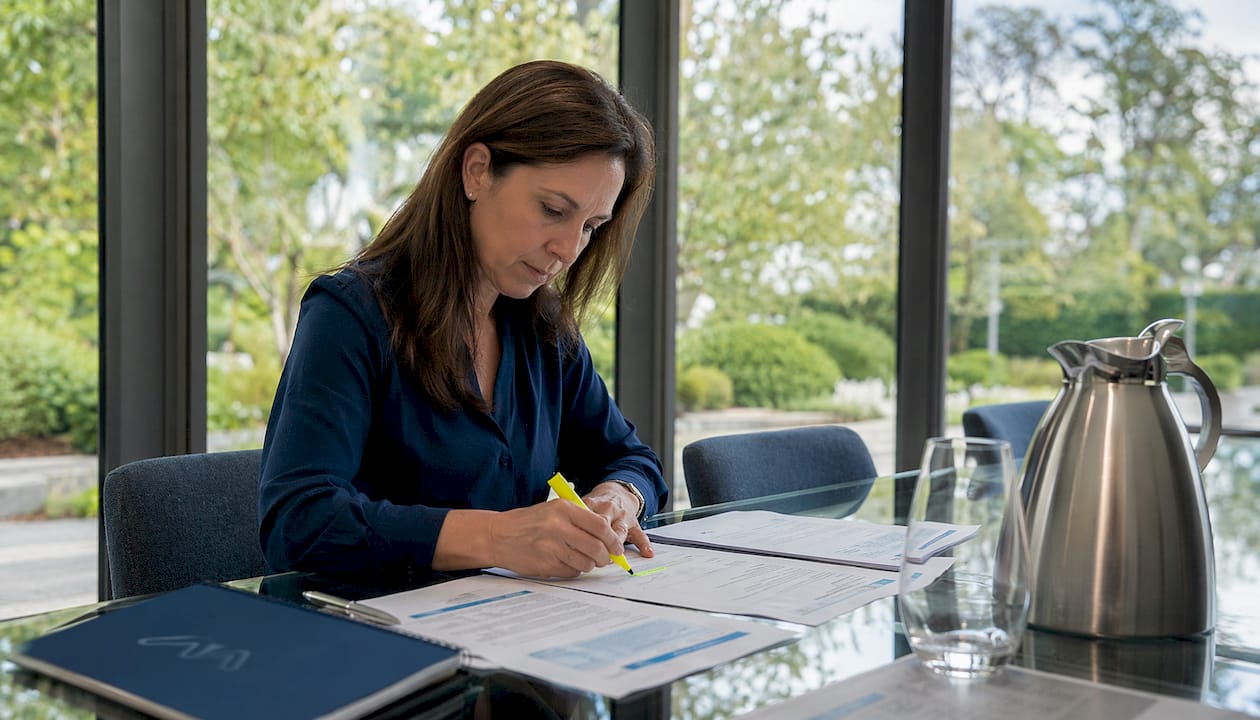
A water risk assessment in a GP surgery is a systematic process that identifies waterborne hazards, evaluates their likelihood and consequence, and sets out controls to protect patients and staff. The formal industry term is a “water safety plan,” governed by HTM 04-01 and overseen by the Care Quality Commission (CQC). The benefits of water risk assessment in GP surgeries extend well beyond a compliance checkbox: they directly reduce infection risk, support CQC inspection readiness, and embed a culture of proactive safety management into daily practice operations.
1. Benefits of water risk assessment in GP surgeries: infection control
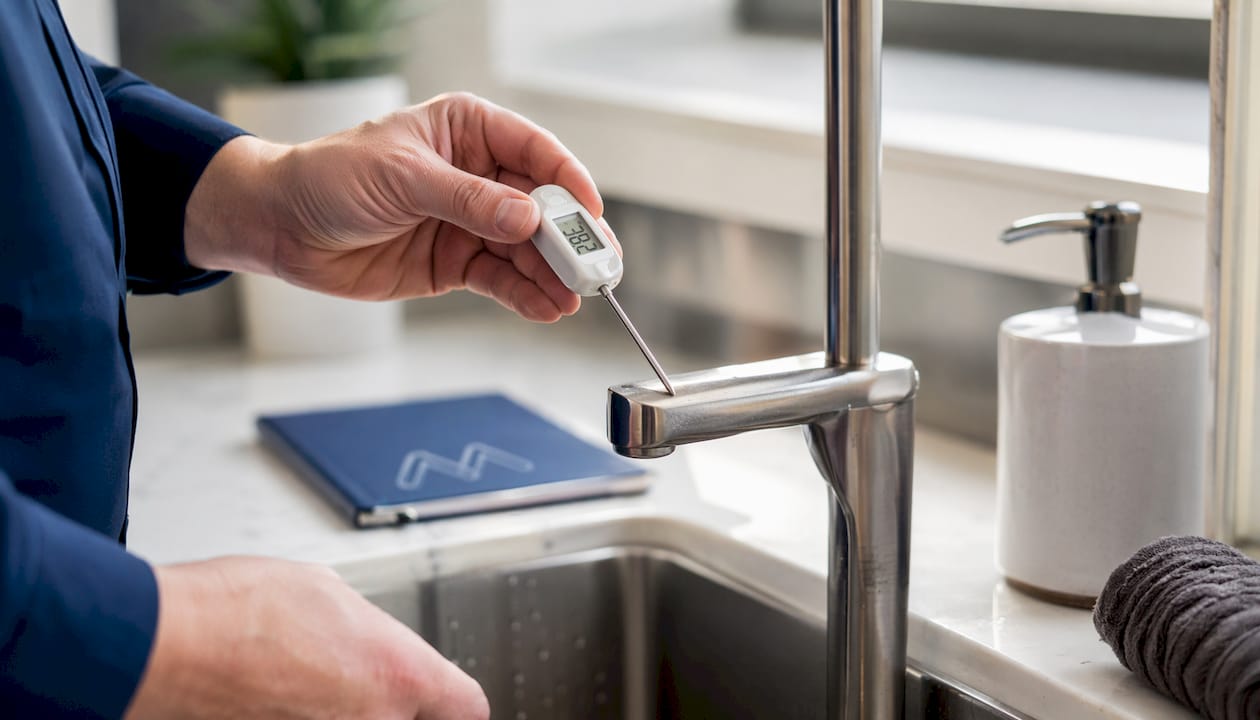
The primary benefit of a water risk assessment is the systematic identification of Legionella bacteria and other waterborne pathogens before they reach patients. Legionella thrives in water systems where temperatures sit between 20°C and 45°C, and GP surgeries with infrequently used outlets, dead legs, or ageing pipework are particularly vulnerable. A structured assessment maps every risk point and assigns controls: temperature management, flushing regimes, and thermostatic mixing valve (TMV) servicing.
Vulnerable patient groups, including the elderly, immunocompromised individuals, and those with chronic respiratory conditions, face the greatest harm from waterborne infection exposure. A risk assessment forces the practice to consider these groups explicitly, not as an afterthought. Controls documented in the assessment become the standing instructions for whoever manages the premises.
Temperature checks on hot and cold water outlets at defined frequencies
Flushing of infrequently used taps and showers to prevent stagnation
TMV servicing schedules to prevent scalding and bacterial growth
Water sampling to verify microbiological quality at point of use
Pro Tip: Record the date, result, and name of the person conducting each check. CQC inspectors look for evidence that controls are being carried out, not just that they exist on paper.
2. How assessments support CQC compliance
Water hygiene risk assessments in GP practices must be reviewed annually to satisfy CQC’s “Well-led” and “Effective” inspection domains. Other site risk assessments are updated every two years, but water hygiene carries a shorter cycle because bacterial risk can change rapidly with seasonal temperature shifts or changes in building use. Practices that miss this cycle create an immediate evidence gap during inspection.
CQC inspectors increasingly focus on documented risk reduction rather than hazard identification alone. A practice that lists hazards but cannot show what changed as a result will not satisfy the “Well-led” domain. The standard expected is an active management record: inherent risk scored before controls, residual risk scored after controls, and a clear audit trail showing who verified each measure.
Conduct the water hygiene risk assessment and record the date of completion.
Document inherent risk scores for each identified hazard.
Implement the specified controls and record the actions taken.
Re-score residual risk after controls are in place.
Schedule the next annual review and assign a named responsible person.
Recording both inherent and residual risks offers clear proof of control effectiveness, a method valued by inspectors and auditors alike. A risk score moving from 12 (high) to 6 (low) after specific controls are implemented tells a clear story of active management.
3. Legal duties and the written control scheme
Since july 2026, healthcare facilities require a written Legionella risk assessment and a formal scheme of control. Smaller GP practices are not exempt. The scheme of control is the operational companion to the risk assessment: it specifies who does what, when, and how, covering every water system in the building.
HTM 04-01 expects healthcare providers to implement water safety plans covering Legionella and other pathogens, with a named water safety group accountable for active management. For a single-site GP surgery, this does not require a large committee. It does require a named responsible person, a written plan, and evidence of regular review. Practices that treat this as a documentation exercise rather than a genuine management tool are the ones that face enforcement action.
4. Operational integration: making assessments work day to day
A water risk assessment only delivers value if it connects to daily practice operations. Embedding risk assessments in daily operations with linked incident reporting and staff training ensures the documents remain live and effective, satisfying CQC’s expectations. A document filed in a drawer and reviewed once a year is not a management tool.
The operational benefits become real when the assessment drives staff behaviour. Reception staff who notice a tap running cold, or a cleaner who spots discolouration, need to know who to report to and what happens next. That chain of awareness starts with training grounded in the risk assessment.
Assign a named water safety lead within the practice
Link the risk assessment to the incident reporting system
Brief all relevant staff on the hazards identified and the controls in place
Use digital templates to generate site-specific hazard registers rather than generic forms
Pro Tip: AI-driven tailored risk assessments reduce the risk of generic templates that miss site-specific hazards. A template built around your building’s actual water system is far more defensible at inspection than an off-the-shelf document.
5. Financial and risk management advantages
The financial case for proactive water risk management is straightforward. Reactive remediation after a Legionella outbreak costs far more than a structured assessment and control programme. Risk consequence bands calibrated to financial impacts help practices prioritise and budget for remediation: significant risks can range from £100,000 to £500,000 when factoring in downtime, liability, and reputational damage.
Risk level | Typical financial consequence | Example scenario |
Minor | Below £20,000 | Isolated outlet remediation |
Moderate | £20,000 to £100,000 | System disinfection and temporary closure |
Significant | £100,000 to £500,000 | Outbreak investigation, legal liability |
Catastrophic | Above £500,000 | Multi-patient harm, enforcement action |
A structured water risk assessment outputs a ranked risk register, a mitigation plan with a cost model, and monitoring protocols. This forms an investment case for remediation spend. Practices can present the risk register to their board or CCG to justify capital expenditure on ageing water infrastructure, rather than waiting for a failure to force the decision.
6. Infrastructure resilience and supply continuity
Water resilience planning in healthcare requires system design that allows inspection and cleaning without service interruption. Cold water storage tanks must be compartmentalised so that maintenance can be staged without shutting down clinical areas. A risk assessment identifies whether the current infrastructure meets this standard or whether modifications are needed.
GP surgeries with a single cold water tank and no isolation capability face a genuine operational risk. If that tank requires cleaning or repair, the surgery may need to close. A risk assessment surfaces this vulnerability and allows the practice to plan a solution before the problem becomes a crisis. Water risk management in healthcare demands near-zero tolerance for supply interruption, and the assessment is the tool that makes that standard achievable.
7. Technology and continuous monitoring
Continuous IoT water monitoring replaces manual site visits by offering real-time temperature data, immediate alerts, and tamper-proof audit trails. IoT sensors measure temperature continuously, alert on excursions, and provide audit-ready logs that satisfy both CQC and HTM 04-01 requirements. This is a material shift from the traditional approach of monthly manual checks recorded on paper.
Monitoring approach | Frequency | Audit trail | Alert capability |
Manual temperature checks | Monthly or quarterly | Paper log | None |
Automated IoT sensors | Continuous | Digital, tamper-proof | Immediate |
Continuous digital monitoring provides “defensible evidence” for regulatory inspections and supports a proactive safety culture. A dashboard showing 90 days of continuous temperature compliance is a far stronger inspection document than a folder of handwritten logs. Practices adopting automated temperature monitoring also reduce the staff time spent on manual checks, freeing clinical and administrative resource for patient-facing work.
Key takeaways
A water risk assessment is the single most effective tool a GP surgery has for preventing waterborne infection, demonstrating CQC compliance, and managing the financial consequences of water system failures.
Point | Details |
Annual review is mandatory | Water hygiene assessments must be reviewed every year to satisfy CQC inspection requirements. |
Document inherent and residual risk | Recording risk scores before and after controls provides the evidence inspectors require. |
Financial exposure is significant | Significant waterborne incidents can cost between £100,000 and £500,000 in liability and remediation. |
Operational integration is essential | The assessment must connect to incident reporting and staff training to function as a live document. |
IoT monitoring strengthens governance | Continuous automated monitoring produces tamper-proof audit trails that outperform manual records. |
Why generic assessments are the biggest risk I see in GP surgeries
The practices that struggle most at CQC inspection are not the ones with no risk assessment. They are the ones with a risk assessment that does not reflect their building. I have reviewed documents that list water outlets that do not exist in the surgery, miss dead legs that are clearly visible in the plant room, and carry control measures that nobody on site has ever carried out. A generic template gives a false sense of security.
What actually works is a site-specific assessment built around the real water system, with controls that the named responsible person understands and can evidence. The residual risk score is the most underused tool in the process. When a practice can show that a risk moved from high to low because of a specific control, that is the moment the assessment becomes genuinely useful rather than just a compliance document.
My honest view is that water risk management belongs in the same conversation as infection prevention and control, not in a separate folder managed by the premises lead alone. The two disciplines overlap significantly, and practices that treat them as connected tend to have better outcomes at inspection and, more importantly, for patients.
— Sammi
Bespokecompliancesolutions: specialist water risk support for GP surgeries
GP surgeries need water risk assessments that reflect their actual premises, not generic documents that create a false sense of compliance. Bespokecompliancesolutions delivers bespoke Legionella risk assessments built around your specific water system, aligned with HTM 04-01 and CQC inspection standards.
The service covers water sampling and analysis, TMV servicing, Legionella awareness training, and implementation of a bespoke logbook system. Every assessment is site-specific and comes with an ongoing consultancy relationship, so your practice stays compliant as standards evolve. Bespokecompliancesolutions works with GP surgeries across the UK to make water hygiene compliance straightforward and audit-ready.
FAQ
What is a water risk assessment in a GP surgery?
A water risk assessment is a systematic review of all water systems in a GP surgery to identify hazards such as Legionella, document controls, and evidence ongoing management. It forms the foundation of the water safety plan required under HTM 04-01.
How often must a GP surgery review its water risk assessment?
Water hygiene risk assessments must be reviewed annually in GP practices. Other site risk assessments are updated every two years, but the shorter cycle for water hygiene reflects the speed at which bacterial risk can change.
What does CQC look for in a water risk assessment?
CQC inspectors look for evidence of active risk reduction, not just hazard identification. Practices must show documented inherent and residual risk scores, completed control measures, and a named responsible person accountable for ongoing management.
What are the risks of water contamination in a GP surgery?
The primary risks include Legionella bacteria causing Legionnaires’ disease, Pseudomonas aeruginosa in immunocompromised patients, and scalding from unserviced TMVs. Vulnerable patient groups face the most serious consequences from waterborne infection.
Does a small GP surgery need a formal Legionella risk assessment?
Yes. Since july 2026, all healthcare facilities, including smaller GP practices, are required to hold a written Legionella risk assessment and a formal scheme of control. Practice size does not reduce the legal duty.
Recommended
Comments