
Why large hot water systems pose risk to your site
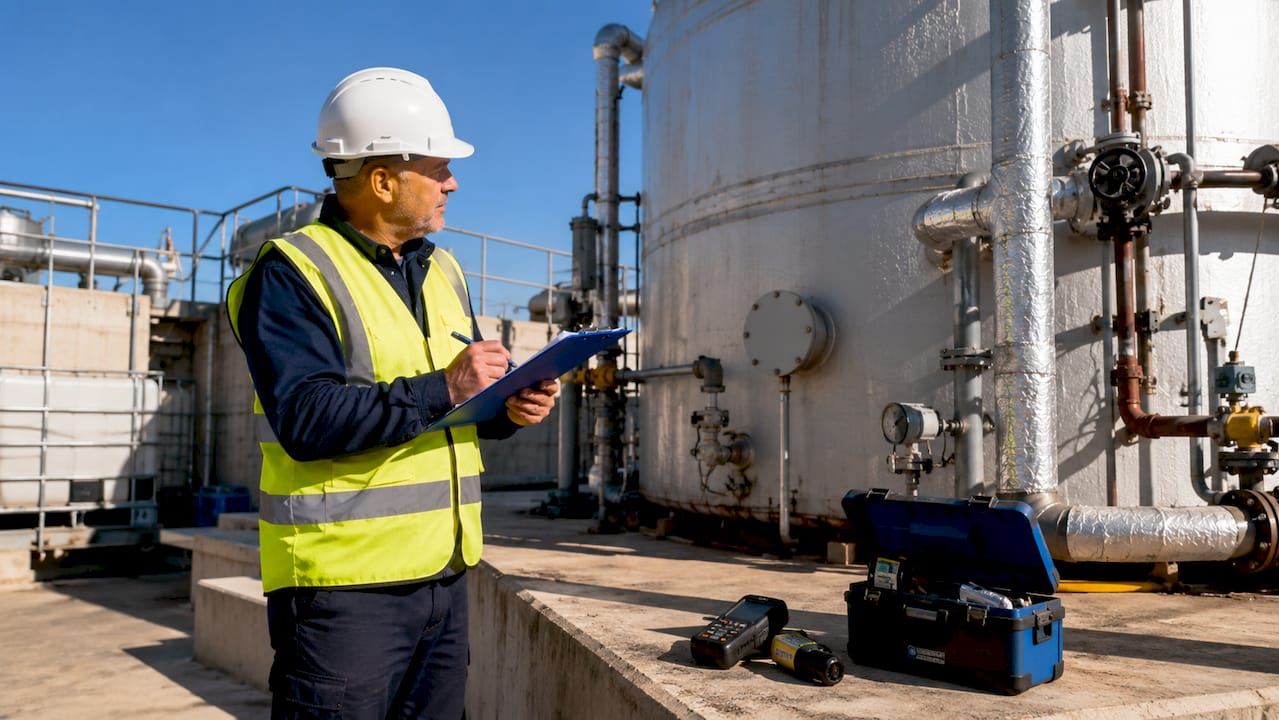
Large hot water systems are a primary source of Legionella proliferation, scalding injury, and catastrophic mechanical failure in commercial and healthcare buildings. Facilities managers and compliance officers face a distinct set of hazards that simply do not apply at smaller scale. The volume of stored water, the length of pipework, and the thermal complexity of these installations create conditions that standard maintenance routines frequently miss. Understanding why large hot water systems pose risk is the first step toward building a control programme that protects occupants and satisfies regulatory scrutiny under HSE guidance and the Approved Code of Practice L8.
Why large hot water systems pose risk of Legionella growth
Legionella bacteria thrive between 25°C and 45°C, a range that large storage systems frequently touch during periods of low demand or poor circulation. CDC guidance confirms that storage temperatures must exceed 60°C and circulating temperatures must stay above 49°C to suppress bacterial growth. Large systems make this harder to achieve consistently because heat loss across extensive pipework pulls water temperatures down before it reaches distant outlets.
Thermal stratification compounds this problem in ways that thermostat readings alone will never reveal. Cooler water settles at the base of large storage tanks, creating pockets where Legionella can multiply even when the thermostat reports a safe temperature at the top. Facilities managers who rely solely on a single sensor reading are operating with incomplete information.
The physical design of large systems introduces additional risk factors:
Dead legs are sections of pipework that carry no regular flow. Water stagnates, cools, and becomes a breeding ground for bacteria.
Low-flow periods occur overnight or during building closures, allowing water throughout the system to drift into the danger zone.
Extensive distribution networks mean that heat generated at the calorifier takes longer to reach terminal outlets, extending the time water spends at unsafe temperatures.
Infrequently used outlets such as emergency showers or rarely opened taps accumulate stagnant water that can harbour high bacterial counts.
Pro Tip: Carry out a temperature monitoring audit at multiple points across the distribution network, not just at the calorifier. Dead legs should be identified, removed where possible, or flushed on a documented schedule.
What are the scalding risks from large hot water systems?
Scalding is the most immediate physical danger associated with large hot water systems, and the consequences are severe. More than 90% of serious scald injuries occur among vulnerable groups, specifically children, elderly people, and disabled persons, when water at the point of use exceeds 50°C. Healthcare settings carry particular exposure because these groups make up a significant proportion of building occupants.
The tension at the heart of scald risk management is this: the temperatures needed to suppress Legionella are high enough to cause serious burns within seconds. Storage at 60°C and above is bacteriologically necessary, but delivery at that temperature to a tap or shower is dangerous. The solution lies in correctly specified and maintained blending controls.
The following steps represent the standard approach to managing delivery temperatures safely:
Install thermostatic mixing valves (TMVs) at point of use. TMVs blend hot and cold water to deliver a safe output, typically no higher than 43°C in healthcare settings and 46°C in commercial premises.
Test TMVs at least annually. Valve failure is a common and underreported cause of scalding incidents. A seized or corroded valve can deliver full system temperature directly to the outlet.
Check for signs of valve deterioration. Inconsistent outlet temperatures, water that runs hotter than expected, and slow response to adjustment all indicate a valve that needs servicing.
Document every test and service visit. Regulatory inspections under HSE L8 require evidence of a functioning control programme, not just verbal assurances.
Prioritise high-risk outlets. Baths, showers, and bidets used by vulnerable occupants require more frequent checks than staff-only facilities.
Bespokecompliancesolutions provides TMV servicing as part of its water hygiene programmes, ensuring that blending controls across a site remain within specification and are properly recorded.
Why do large hot water systems carry a higher mechanical failure risk?
Mechanical failure in large hot water systems is not a remote possibility. It is a documented hazard with consequences that range from flooding to structural destruction. The temperature and pressure relief valve, commonly called the T&P valve, is the primary safety device preventing catastrophic failure. Standard T&P valves open at 99°C or 150 psi and must be tested and inspected regularly. A valve that has seized through corrosion or mineral deposit cannot perform this function.
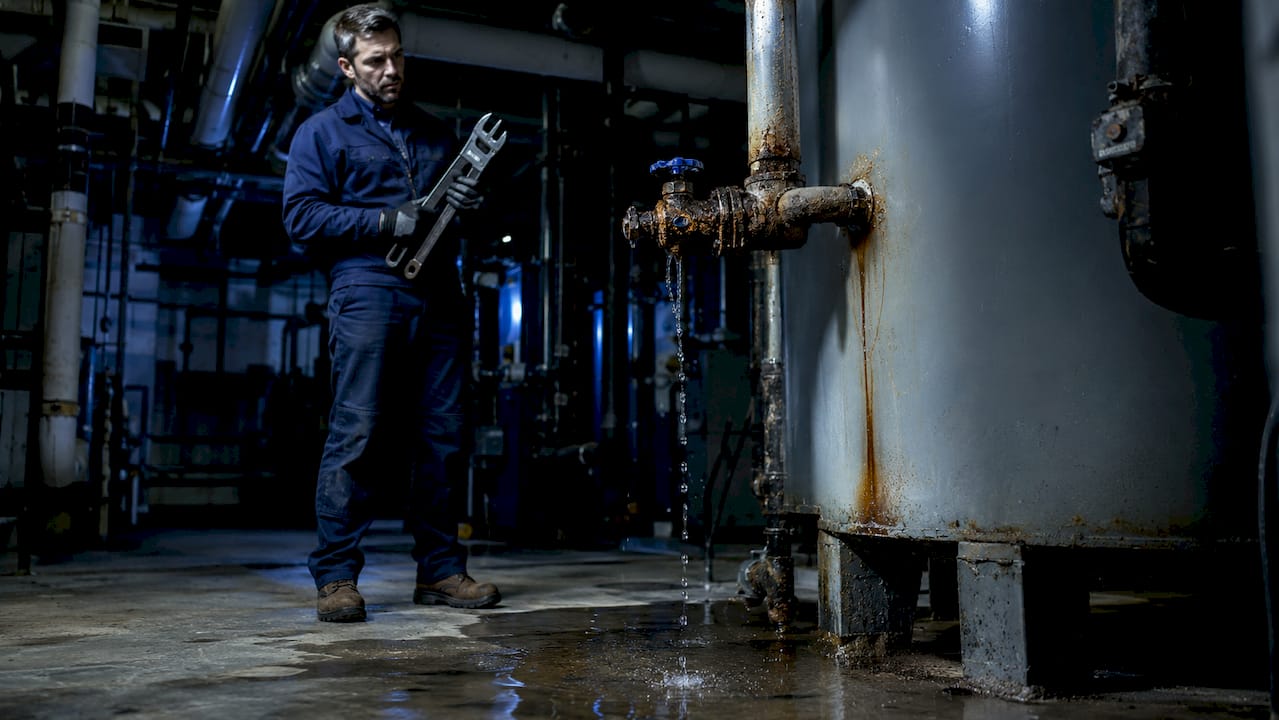
The most extreme consequence of T&P valve failure is a Boiling Liquid Expanding Vapour Explosion, known as a BLEVE. Steam expansion upon tank rupture is approximately 1,700 times the original water volume. The force generated can propel a large water heater through multiple floors of a building. This is not a theoretical risk. It is a documented failure mode with recorded fatalities.
Failure sign | Likely cause | Potential consequence |
Rust-coloured water | Internal tank corrosion | Structural thinning, sudden rupture |
Dripping from T&P valve | Excess pressure or valve wear | Uncontrolled pressure release, flooding |
Rumbling or popping noises | Sediment buildup on heating element | Reduced efficiency, accelerated corrosion |
Constant valve discharge | Pressure exceeding safe limits | Imminent catastrophic failure |
Visible external corrosion | Age, moisture exposure | Weakened casing, leak risk |
Rust-coloured water and popping noises are not minor inconveniences. They are early indicators of advanced internal corrosion and sediment accumulation that precede sudden failure. Facilities managers who log these symptoms and delay action are accepting a risk that no insurance policy fully covers.
Pro Tip: Schedule T&P valve testing as a fixed calendar event, not a reactive task. A valve that has never been tested may have seized in the closed position, offering no protection at all.
How do infrastructure and operational factors increase risk?
The risks of oversized hot water systems extend beyond the tank itself. The infrastructure feeding and surrounding the system introduces its own hazards, many of which operate silently until a serious incident occurs.
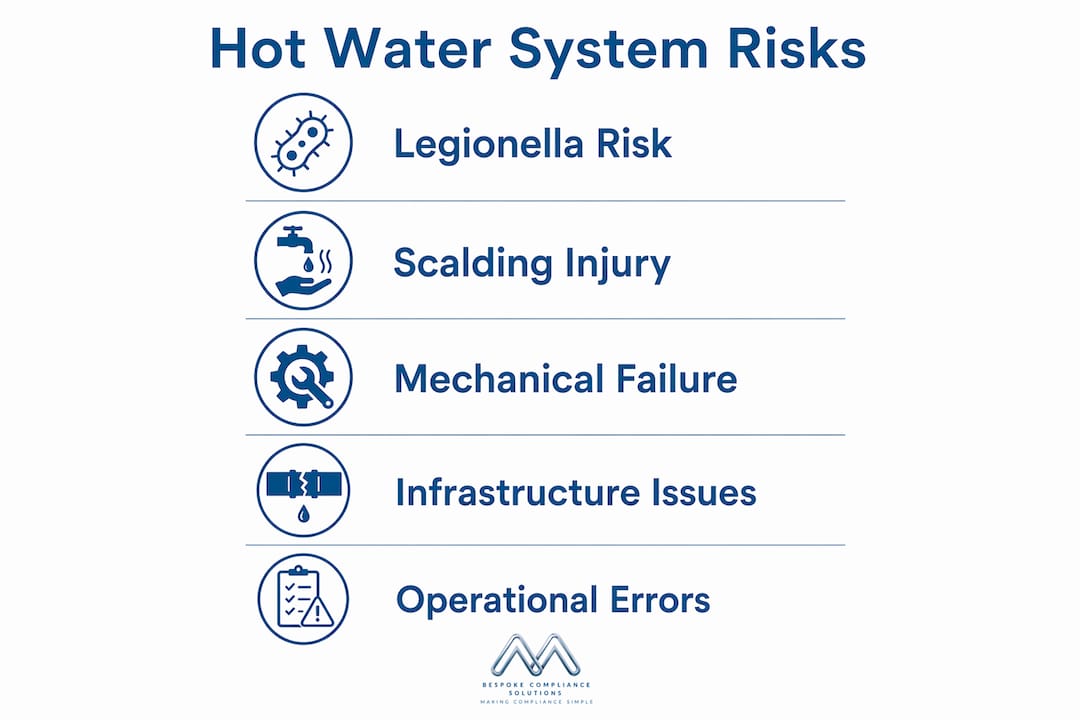
Gas-powered commercial water heaters require correctly sized supply lines. An undersized gas line reduces combustion efficiency and increases the likelihood of incomplete fuel burn, which produces carbon monoxide. A 3/4-inch residential supply line is wholly inadequate for a large commercial burner rated at 199,000 BTU or above. The consequences of this mismatch are not always obvious. The heater may appear to function normally while producing dangerous levels of CO in the plant room.
Gas hot water systems also depend on adequate ventilation and combustion air supply. Blocked flues, poorly designed plant rooms, and insufficient air intake all contribute to CO risk. Warning signs include yellow or orange flames rather than a steady blue flame, and unusual odours near the appliance.
Common operational errors that facilities managers should address:
Skipping annual inspections because the system appears to be working. Silent symptoms precede most catastrophic failures.
Failing to flush infrequently used outlets on a documented schedule, allowing stagnant water to accumulate bacterial load.
Ignoring unusual noises or odours from the plant room, which frequently indicate combustion or pressure problems.
Relying on a single temperature sensor to confirm system safety, rather than profiling temperatures across the full distribution network.
Delaying valve replacements beyond manufacturer service intervals, increasing the probability of seizure.
Pro Tip: Conduct a monthly walk-through of the plant room and log any unusual sounds, odours, or visible discharge. This simple habit catches the majority of developing faults before they escalate.
Key takeaways
Large hot water systems present multiple, simultaneous risks that require active management across bacterial control, temperature safety, mechanical integrity, and infrastructure adequacy.
Point | Details |
Legionella temperature control | Store above 60°C and circulate above 49°C; monitor at multiple points, not just the calorifier. |
Thermal stratification | Temperature profiling across the full tank is necessary to detect cool pockets where bacteria multiply. |
Scald prevention | Install and annually test TMVs at point of use; prioritise outlets used by vulnerable occupants. |
Mechanical failure indicators | Rust-coloured water, valve drips, and rumbling noises require immediate investigation, not deferred action. |
Infrastructure adequacy | Gas supply lines and ventilation must be correctly specified for the burner capacity installed. |
The compliance gap most facilities managers do not see
Working with commercial and healthcare sites across the UK, I have noticed a consistent pattern. Facilities managers who are diligent about Legionella temperature records often have significant blind spots elsewhere. The T&P valve that has never been tested. The dead leg that appeared on no drawing because it was created during a refurbishment three years ago. The TMV that was serviced once and then forgotten.
The uncomfortable truth is that large hot water systems are not inherently unmanageable. They become dangerous when compliance is treated as a documentation exercise rather than an operational discipline. A logbook full of temperature records means very little if the system design has never been reviewed against current Legionella risk management standards.
Automated temperature monitoring changes this dynamic significantly. Continuous data logging removes the gap between manual checks and gives compliance officers evidence they can act on in real time, rather than discovering a problem at the next scheduled visit. The technology is not expensive relative to the liability it mitigates.
My strongest advice to any facilities manager reading this is to commission a full system review before the next regulatory inspection, not after it. The risks of oversized hot water systems are well documented. The question is whether your site’s control programme reflects that knowledge.
— Sammi
How Bespokecompliancesolutions supports large hot water system safety
Bespokecompliancesolutions works with commercial and healthcare facilities across the UK to identify and control the full range of hot water system risks, from Legionella proliferation to mechanical failure and scalding hazards.
Our services include bespoke Legionella risk assessments, water tank disinfection and flushing, TMV servicing, and automated temperature monitoring to close the gaps that manual checks miss. Every programme is built around your site’s specific configuration, occupancy profile, and regulatory obligations. Whether you manage a single commercial building or a multi-site healthcare estate, Bespokecompliancesolutions provides the specialist support needed to keep your water systems safe, compliant, and fully documented.
FAQ
Why do large hot water systems pose a greater Legionella risk than smaller ones?
Large systems store greater volumes of water across extensive pipework, creating more opportunities for thermal stratification, dead legs, and low-flow zones where Legionella bacteria can multiply. Smaller systems are easier to maintain at consistent safe temperatures throughout.
What temperature should a large hot water system store water at?
CDC guidance confirms that storage temperatures must exceed 60°C and circulating temperatures must stay above 49°C to suppress Legionella growth effectively.
How often should T&P relief valves be tested on large water heaters?
T&P valves should be tested at least annually. A valve that has never been tested may have seized in the closed position, providing no protection against dangerous pressure buildup.
Are large hot water systems safe in healthcare settings?
Large hot water systems can be managed safely in healthcare settings, but they require a documented control programme covering temperature monitoring, TMV servicing, and regular risk assessment. Vulnerable patient populations increase the consequences of any control failure, making Legionella compliance for healthcare a regulatory and ethical priority.
What are the warning signs of imminent hot water tank failure?
Rust-coloured water, constant dripping from the T&P valve, rumbling or popping noises, and visible external corrosion are all indicators of advanced deterioration. Each sign warrants immediate investigation rather than a deferred maintenance response.
Recommended
Comments